
TOP 10 Exhibitions in 2025
-
GANGNEUNG INTERNATIONAL ART FESTIVAL 2025 / GIAF25 개요 、カンヌン駅含む周辺8箇所
-
Rashid Johnson: A Poem for Deep Thinkers 、The Guggenheim Musuems and Foundation
-
The Joy of Making: DIY for Living /「つくるよろこび、生きるためのDIY」、東京都美術館
-
The Splendor of Dream of the Red Chamber/看得見的紅樓夢, 目で見る紅楼夢、國立故宮博物院
-
[Honorable Mention] When Does Sound Become Sound?/音はいつ、音になる?、東京藝術大学大学美術館 陳列館2階
Aichi Triennale 2025: A Time Between Ashes and Roses 灰と薔薇のあいまに
Anqi Li
The title of Aichi Triennale 2025, A Time Between Ashes and Roses, and its watercoloured poster suggest gentleness, fragility, perhaps even rebirth. Yet the exhibition insists on violence, erasure, and resilience. Curated by a team led by artistic director Hoor Al Qasimi, the triennale addresses forms of violence and oppression, particularly in relation to Palestine and broader histories of displacement. What distinguishes this edition is the way it structures attention. The exhibition unfolds not through spectacle but through duration.
This emphasis on duration first becomes visible in how space is organized. At the Aichi Arts Center’s main exhibition site, a single artist often occupies an entire room with multiple works. This spatial strategy limits lateral comparison and instead emphasizes temporal progression. To move through the exhibition is to walk, pause, and recalibrate before entering another room. Meaning accumulates through movement. Violence is not presented as a series of interchangeable scenes, but as something that demands time.
The white cube’s presumed neutrality is put into play, becoming an active framework shaped by installation decisions. Hrair Sarkissian’s Stolen Past (2025) (figure 1) is a compelling example. In this work, 3D-printed lithophanes render lost heritage objects as pale, ghostlike presences. These fragile surfaces require proximity; their images only appear fully as light passes through them. Rows of wooden plinths, standing quietly like tombstones, turn the gallery into a memorial for the lost artefacts.

Figure 1. | Hrair Sarkissian, “Stolen Past,” 2025, installation view, photography: Anqi Li
Other unconventional installation strategies make looking physical. For instance, one of Bassim Al Shaker’s oil paintings is mounted on the ceiling (figure 2), compelling viewers to look upward. The gesture echoes the position from which the artist once witnessed aerial bombardment as a teenager. The past overlaps with the present.

Figure 2. | Bassim Al Shaker, “Sky Revolution,” 2023, installation view, photography: Anqi Li
Creative spatial thinking continues beyond enclosed galleries. Christodoulos Panayiotou’s Jardin des refusés (2025) inhabits the existing open-air courtyard of the Aichi Arts Center (figure 3), demonstrating that unselected roses can still bloom and form a garden. In doing so, the work asserts that existence precedes selection. Its presence resonates with the nature-inspired paintings of Kamala Ibrahim Ishag in the next room, where roots reach out to connect.

Figure 3. | Christodoulos Panayiotou, “Jardin des refusés,” 2025, installation view, photography: Anqi Li
Even within shared galleries, separation remains carefully curated. Afra Al Dhaheri’s Fil Al Shaar (Unravel the Hair) (2020) (figure 4) functions as a porous spatial divider, its extended swaying forms running across the room. It both separates and connects, enclosing while gesturing toward her nearby work One at a Time (To Detangle Series) (2020).

Figure 4. | Afra Al Dhaheri, “Fil Al Shaar (Unravel the Hair),” 2020, installation view, photography: Anqi Li
In addition to spatial strategies, duration is also enacted through the senses. Mirna Bamieh’s work engages with food as a living cultural practice. In Sour Cords and Bitter Things: In the Name of an Orange (2024), ceramic forms mimic chilli peppers, okra, garlic, and cloves (figure 5). Interwoven with Mahmoud Darwish’s line, “You will not be forgotten as if you never existed,” the installation ties cultivation to memory and land. Agriculture appears as a practice dependent on time and care. Under conditions of displacement, time itself becomes precarious. Culture resists erasure through labour, growth, and taste.

Figure 5. | Mirna Bamieh, “Sour Cords and Bitter Things: In the Name of an Orange,” 2024, installation view, photography: Anqi Li
The emphasis on food as temporal practice extends beyond the main venue. At the satellite site in Seto, Michael Rakowitz’s Okonomiraqi—a combination of the Japanese dish okonomiyaki and Iraqi food from Rakowitz’s family heritage—also translates food into shared experience (figure 6). Visitors wait as it is prepared, then eat and drink together. Community across distance and unfamiliarity is formed through anticipation and exchange over time.

Figure 6. | Michael Rakowitz, “Okonomiraqi,” 2025, UMEMURA Shoten, photography: Anqi Li
Performance carries this embodied temporality further. The live activation of May amnesia never kiss us on the mouth: Only sounds that tremble through us gathers people in the shared vibration of music. Solidarity emerges as a condition of co-presence. Palestinian DJ Julmud, who was initially scheduled to perform in person, had to perform online from New York at 7 am for safety reasons. The time difference became tangible evidence of geopolitical constraint, a condition shared by those present.
This physical distance between Japan and Palestine may have enabled this edition of the triennale to take place. This distance operates geographically and as a buffer of political risk. Japan’s relative remove from the immediate conflict creates a space for articulation that might be more precarious elsewhere. Yet distance itself becomes part of the exhibition’s structure. It makes solidarity visible, yet contained within institutional boundaries. The question remains whether the exhibition transforms that distance into responsibility or simply instrumentalizes it. Rather than adopting a declarative stance, it sustains attention and resists abstraction.
Aichi Triennale 2025: A Time Between Ashes and Roses 灰と薔薇のあいまに
Aichi Arts Center / Aichi Prefectural Ceramic Museum / Seto City 2025 9.13 —11.30
Remembering through Objects: Institutional Memory and Hiroshima
Wang Yilin
The exhibition Between Memories and Objects:Monuments, Museums, and Archives, presented at the Hiroshima City Museum of Contemporary Art from June 21 to September 15, 2025, approaches the eightieth anniversary of the atomic bombing not as a moment of closure, but as a problem that remains structurally unresolved. Rather than reaffirming Hiroshima as a fixed symbol of peace or victimhood, the exhibition examines how memory has been materially produced, displaced, and reassembled through objects, institutions, and acts of preservation. Its central concern is not what should be remembered, but how remembrance itself is mediated by monuments, museum practices, and archival decisions.
From the outset, the exhibition avoids the visual rhetoric typically associated with atomic bomb commemorations. There is no singular narrative of devastation, no linear progression from destruction to recovery. Instead, memory emerges as fragmented and uneven, anchored in objects that have survived, been removed, or been recontextualized. This curatorial choice reflects an understanding of memory as something constructed through institutional frameworks rather than inherited intact from the past.
A key point of departure is the treatment of monuments, particularly those no longer physically present. The exhibition revisits the former statue of Admiral Tomosaburo Kato, once erected near the museum site and later removed. What is displayed is not the monument itself, but its photographic records and remaining pedestal. This absence is not framed as a loss to be mourned, but as evidence of how public memory is actively reorganized. The removal of the statue becomes a historical act in its own right, revealing how monuments are contingent upon political climates and shifting value systems. By foregrounding what is no longer visible, the exhibition exposes forgetting as a constitutive element of memory rather than its failure.

Figure 1. |An Ordinary LIfe by Fiona Amundsen, Kanariya Eishi, 2025.Performance View,14' 58" Photo by Wang Yilin
This logic extends into the museum’s own collection, which occupies a central role in the exhibition. Works by artists such as Henry Moore and the Maruki couple are presented not simply as artistic responses to Hiroshima, but as objects that have accrued meaning through decades of institutional circulation. Their inclusion raises implicit questions about why certain works come to stand in for Hiroshima’s memory, while others remain peripheral or excluded. The exhibition does not provide definitive answers, but it does draw attention to the museum’s authority in shaping these hierarchies. In doing so, it acknowledges that the museum is not a neutral container of memory, but an active agent in its production.
Contemporary artworks in the exhibition further complicate this institutional narrative. Rather than offering new images of trauma, these works often focus on processes of mediation, documentation, and participation. Archive based practices question the presumed transparency of historical records, while participatory projects invite visitors to articulate their own positions in relation to Hiroshima’s past. These interventions do not attempt to replace historical memory with personal experience, but instead emphasize the distance between them. Memory here is not something that can be fully recovered, but something that must be continuously negotiated across generations.
What distinguishes Between Memories and Objects from more conventional commemorative exhibitions is its sustained attention to materiality. Objects are treated not as passive remnants, but as interfaces that shape how memory is encountered and interpreted. Pedestals, photographs, documents, and artworks function as nodes within a network of institutional practices. Through their arrangement, the exhibition suggests that memory is assembled through acts of selection, classification, and display. This emphasis on material processes aligns the exhibition with contemporary debates in museum studies that question the authority of the archive and the politics of preservation.

Figure 2.|Reiwa Cherry Blossoms -75 years After WW II by Dokuyama Bontaro, 2025. Photo by Wang Yilin

Figure 3.|Live for Love by Ueda Naoji, 2025. Photo by Wang Yilin
At the same time, the exhibition does not fully detach itself from Hiroshima’s broader symbolic framework as a peace city. Its critical stance remains measured, avoiding overt confrontation with national narratives or explicit moral judgment. This restraint can be read in two ways. On one hand, it allows for a reflective space in which viewers are encouraged to think through the complexities of memory without being directed toward a predetermined conclusion. On the other hand, it risks softening the political stakes of commemoration, particularly in a moment when the global implications of nuclear violence remain urgently relevant.
Ultimately, the exhibition invites viewers to consider the museum not as a site of moral resolution, but as a space where historical meaning is continually reorganized. In doing so, it shifts the focus from the event of the bombing to the ongoing labor of memory. The question it leaves open is not whether Hiroshima should be remembered, but how institutions, objects, and viewers alike participate in shaping what that remembrance becomes.
Between Memories and Objects—-Monuments, Museums, and Archives
被爆80周年記念 記憶と物 ―モニュメント・ミュージアム・アーカイブ―
広島市現代美術館 2025 6.21 —9.15
Gangneung International Art Festival
タニグチアスカ
韓国の北東に位置する江陵(カンヌン)は、ユネスコ登録文化遺産であり1000年以上続く伝統的な祭り・江陵端午祭で知られる。その膝元で市街8カ所に繰り出して約一ヵ月間行われたGangneung International Art Festival(以降GIAF)。2023年以来の開催となった今回は、国内外合わせて11組のアーティストが招聘された。
この芸術祭の特徴は、開催のコンセプトとして「江陵という土地の歴史」に焦点が当てられ、作家、開催地、ステークホルダー等、芸術祭の構成要素・運営要素もコンセプトを遵守するよう徹底されていることにある。
カンヌン駅を中心に、バスや電車などの公共機関を使わずともすべてのスポットが巡回できるコンパクトな配置となっているにも関わらず、その場所性は、映画館、元病院、街中の倉庫、橋、江陵大都護府官衙※など暮らしに密着する場から歴史的な場まで多岐にわたる。これは一辺倒に「場所が多様であるからよい」のではない。
たとえば、自身が継承してきたアルメニア人虐殺の記憶と自身の家族史を密接に結びつけるフライル・サルキシアンのビデオ・インスタレーション《Sweet & Sour》は、江陵大都護府官衙で展示されていた。大々的に存在を主張するというより隅の暗がりにひっそり据えられたスクリーンは、どこか私的にも感じられる居心地のよさを鑑賞者に与えると同時に歴史の死角を暗示するようなポジションをつくりだす。いっぽう日本統治時代に江陵の医療を担った病院跡地には、GIAF公募アーティストのキワリムがマルチメディア作品を複数設置していた。キワリムは映像やオブジェなどさまざまなメディアを通じて日常生活の要素を断片化し、それらを再構成することで、経験された現実の語りを編み直す。元病院ということで大都護府よりは日常に近い施設のはずが、治療に想起される緊張や住居風情に混じった病院らしさが記憶を明るみに出すようにはたらいていた。


Figure 1. | フライル・サルキシアン《Sweet & Sour》、2021-2022、3チャンネル映像インスタレーション、カラー、サウンド、21分57秒、展示風景、撮影:谷口明日香
Figure 2. | キワリム《50,000won》、2025、シングルチャンネル映像インスタレーション、Starex後部座席、4分54秒、130 × 70 × 80 cm、展示風景、撮影:谷口明日香
具体的な場所が持つ象徴性、空間性などが、鑑賞者の視点を固定する軸として機能すると、鑑賞経験そのものの自由度は抑制される。場所に帰属させられることで鑑賞経験の具体性が増すと、場所のバラつきにより経験の多様性が引き出される。これにより異なる場所間の相対的な経験の多様性ではなく、経験どうしの絶対的な多様性を実現し、抽象的なテーマにもかかわらず歴史全体への帰納を可能にしているのではないだろうか。
江陵は国外からの客にポピュラーな観光地ではない。案内スタッフは地元の住民が務めており、英語も通じなかった。「日本人かな?」と聞かれ「こんにちは」「さようなら」と日本語で挨拶してもらったのは記憶に新しい。国際性を持ちながら、地元の住民をターゲットに地元の新たな側面を探究するクローズドな展覧会という立場を貫いているところも評価したい催しだった。
※ 高麗時代末から朝鮮時代に江陵を支配していた都庁のような施設。当時の姿をそのまま残している部分と復元部分がある。
Gangneung International Art Festival
GIAF25 개요 - GANGNEUNG INTERNATIONAL ART FESTIVAL | 2025
カンヌン駅含む周辺8箇所 2025 3.14 —4.20
ジャム・セッション 石橋財団コレクション×山城知佳子×志賀理江子
漂着
タニグチアスカ
アーティゾン美術館が所蔵する石橋財団コレクションと、現代アーティストの作品で構成されるシリーズ企画展「ジャム・セッション」。第6回目は「漂着」と題され、山城知佳子と志賀理江子の二人が招かれた。山城は沖縄、志賀は東北。両者は特定の土地に根差し作品制作を行ってきた共通点を持つ。本展において特徴的であったのは(他者に没入する)作品を鑑賞する主体が作家主導で設定されることだ。それはある意味で訪れた人間の鑑賞者としての立場を脅かすと感じた。

Figure 1. | 展覧会〈漂着〉展示風景、撮影:谷口 明日香
展覧会を構成する2フロアのうち6階は山城知佳子、5階は志賀理江子に割り当てられている。長年写真や映像を軸に活動を行ってきた山城知佳子が制作したマルチスクリーンの映像インスタレーション《Recalling(s)》は、タイトルが指す通り記憶にまつわる作品だ。山城の父・達雄の記憶を中心に、沖縄・パラオの風景、占領下を生きた人々の姿が複数のスクリーンにそれぞれ映し出され、空間に放たれた再演や語りの音声、音楽などは多層的に往還し場を形成する。視界に2枚以上のスクリーンが入る箇所ができるよう配置や動線が工夫されていた。暗闇のなか、他人の物語が並行して自律的に再生される空間で、鑑賞者は過去を想起し別の記憶と結びつける営みを行う主体として濃密な時間を過ごす。5階に広がる志賀理江子の作品も大型のインスタレーションだ。写真を引き伸ばして作られた壁が部屋を蛇行して作った空間の中央には、全長11メートルのターポリン製の船。壁となった鮮烈なイメージに白い筆跡で刻まれているのは、「褜」(えな)という環境依存文字を名前に持つ架空の人物・内海褜男が登場する物語だ。首に臍の緒などが巻きついて赤子が生まれてくることを指す「褜がらみ」を生と死の複雑な因果を体現する表現と捉えた志賀は、「褜」という言葉の裂け目から現代日本の影を膨らませていく。ときに突き刺さるような言葉を伴う物語の引力は空間に伝播し、鑑賞者をすっぽり飲み込もうとしていた。
「大作」といってよいこの2つの作品の前に「鑑賞者」は必要なのだろうか。作品を経験する主体という意味での鑑賞者は如何なる作品にも存在するが、この展覧会においては距離をとって作品内に練り込まれた他者を観察するのではなく、剥きだしになった他者を追体験することが要求される。一度気がそぞろになれば空間そのものから弾きだされてしまうほど強固な作家主導の言語体系に満たされている。ところどころに設置された、作家が選定したコレクション作品が、鑑賞者をかろうじて客観的な立場に引き戻すように機能していたのかもしれない。展覧会を出てから高密度の没入体験の置き場を探さねばならない疲労が確かにあった。展覧会における鑑賞者とは、どのような役回りなのだろう、と考えずにはいられない。題に選ばれた「漂着」という語は、自らの意思によらず強大な存在に押し流されどこかに辿り着くことを指す。山城と志賀が捉えた他者はそれこそ自身の意思に関わらず周縁化された存在であり、それを直接的に露出させた本展は訪れた人間を自我から引き剥がし押し流す。まさに「漂着」と冠すべき体験を作り出したように感じた。
ジャム・セッション 石橋財団コレクション×山城知佳子×志賀理江子 漂着
アーティゾン美術館 2025 10.11 –2026 1.12
https://www.artizon.museum/exhibition_sp/js_yamashiro_shiga/overview/
Queer Heritage and Family Ties in Manbo Key’s Home Pleasure | 居家娛樂
Lyudmila Georgieva
Manbo Key’s solo exhibition Home Pleasure | 居家娛樂 unfolds at the junction of intimacy politics, queerness, and family bonds. Holding his audience in the tension between these themes, Manbo opens a space beyond norms of propriety where new, genuine relationships can emerge.
Curated by Tomoko Yabumae of the Museum of Contemporary Art Tokyo, the exhibition was held at Parco Museum Tokyo from May 30th to June 9th. It was the first comprehensive survey of Manbo Key’s artistic practice in Japan, featuring photography—both artistic and commercial—installation, and film. The show coincided with Tokyo’s LGBTQ+ Pride weekend, highlighting the queer themes that run throughout his work.
Manbo Key, an openly queer Taiwanese artist, first gained recognition as a fashion photographer with work published in Vogue and CQ Taiwan. Beyond commercial labels, his art consistently interrogates the positioning of photography and film in relation to human intimacy and social relations. As he himself attests, his career was jump-started by the discovery of numerous sextapes of his father with other men. Titled Home Pleasure, these tapes became the foundation for Manbo’s acclaimed photobook Father’s Videotapes (2019), which explores his relationship to his father, shaped both by their shared sexual identity and by the distance created by age, time, and culture.
Father’s Videotapes is at the center of Parco Museum’s exhibition, alongside the extended series Father’s Videotapes: __Avoid A Void. The series showcases stills and photographs of Manbo’s father, alongside installations of the tapes themselves, emphasizing the sheer scale of the Home Pleasure collection. Manbo does not shy away from discomfort, placing side by side, sometimes even within the same photograph, attributes of desire, such as sex toys and nudes, alongside markers of his father’s age: injuries, dental prosthetics, wrinkles, and white hair. At once erotic, curious, and unsettling, these photographs convey the complexity of his relationship with a father whose presence becomes tangible only through the discovery of a shared deviancy. The revelation of his father’s queerness only deepens the mystery of his role in Manbo’s life, which is shaped by his parents’ non-traditional relationship, the loss of his mother, and his father’s emotional distance.
The works do not remain within the strictly personal, however. The title Home Pleasure suggests a clash between the private and the public, signaling the behind-closed-doors nature of the videos in an environment of censure and condemnation in 1980s–90s China. Occupying a space between permissible and forbidden, sexual identity and family life, the photographs transcend individual relationships, situating themselves within a larger context of liberation and violence.

Figure 1. | Manbo Key, naked in Shanghai Hotel (from Home Pleasure series), 2022.Photo by Lyudmila Georgieva
Two accompanying pieces—an interview with Manbo’s adoptive grandmother and his fashion photographs from Pride events—frame the two poles of this tension. In the video interview, Manbo’s grandmother, who grew up in colonized Taiwan, navigates the contradictions between heteronormativity, propriety, and public image, and her complex romantic and familial relationships that defy societal norms. On the opposite end of the spectrum, glossy magazine photographs of provocatively dressed, seemingly liberated contemporary queer youth speak to the ongoing struggle for visibility and the constant threat of co-optation within the capitalist economy. The beautiful bodies in the fashion spreads contrast with the aged, wrinkled body of Manbo’s father—not in antagonism, but in continuity and empathy.
Queerness is at the forefront of Manbo Key’s exhibition, as a framework, a key, and a path for engagement with the pieces. Manbo, however, rejects the simple, clear understanding of what queerness is. Within contemporary artistic and curatorial practices, there is a persistent, and necessary, effort to discover, reinterpret, and, at times, construct queer, feminist, and racially marginalized genealogies that depart from the classical, Western-centred, and male-coded canon. Manbo Key confronts his viewers with an explicit queer heritage, while taking away the ready-made model for its incorporation. By situating homosexuality within familial identity, he avoids both victimhood and idealization. Instead, he depicts his father’s and his own sexual identity with a sense of uncertainty and distance, loss, and liberation.
Suspended between his father’s sexual life, his grandmother’s narrative of choice and solitude, and the glossy Pride photographs of queer bodies, Manbo Key challenges viewers to reconsider assumptions about past and present, family and sexuality, tradition and rebellion. He offers no narrative to resolve these contradictions. Instead, Home Pleasure carves new paths of connection that embrace discomfort and point toward alternatives—not only for the present and future, but also for the past.
Manbo Key: [Home Pleasure|居家娛樂」
Parco Museum Tokyo 2025 5.30 — 6.9

Figure 2. | Manbo Key, Father’s videotapes, 2019.Photo by Lyudmila Georgieva
Opening Documents, Weaving Memories: War Art, Institutional Caution, and the Politics of Neutrality
Wang Yilin
Opening Documents, Weaving Memories: A Special Exhibition Featuring Works from the Museum Collection, held at The National Museum of Modern Art, Tokyo from July 15 to October 26, 2025, positions itself as a scholarly reexamination of wartime visual culture through the lens of documentation and memory. Marking the eightieth anniversary of the end of the Asia Pacific War, the exhibition adopts a notably restrained public posture. Unlike contemporaneous commemorative exhibitions elsewhere in Japan, its publicity materials list only the museum itself as organizer, avoid media collaboration, and employ a subdued visual identity that does not foreground iconic war record paintings. This curatorial and institutional reserve is not incidental. Rather, it reflects a deliberate strategy that shapes both the exhibition’s interpretive framework and its political implications
At first glance, the exhibition could be mistaken for a thematic reinstallation of the permanent collection. This impression underscores the museum’s cautious engagement with war art, a genre that remains deeply contentious within Japan’s postwar cultural landscape. While the exhibition clearly participates in the broader August discourse of peace and reflection, it avoids overt gestures that might attract heightened public or media scrutiny. The result is an atmosphere of tension between the desire to address wartime history and an institutional reluctance to provoke controversy. This tension becomes a defining feature of the exhibition experience.

Figure 1. | Classification of Wartime Art(Terms and Subject Matter) ,2025, Photo by Wang Yilin
In terms of content, Opening Documents, Weaving Memories is both extensive and rigorously researched. Organized into eight sections, it presents a dense assemblage of paintings alongside archival materials including newspapers, propaganda publications, and personal documents. The exhibition reconstructs the wartime media environment in which these works circulated, emphasizing how images functioned simultaneously as aesthetic objects and as instruments embedded within broader national narratives. Through this approach, war paintings are reframed not merely as propaganda artifacts but as historical documents situated within complex social and cultural systems
The curatorial texts consistently adopt a calm and neutral tone. Works are carefully classified and contextualized, yet explicit moral judgments are largely absent. Rather than condemning or valorizing the paintings, the exhibition relies on detailed documentation to guide visitors toward critical reflection. According to curatorial statements cited in the review, the exhibition consciously avoids sensationalism, favoring scholarly rigor over emotional appeal. Notably, an earlier plan for a large scale media collaboration was abandoned in favor of an internally organized project, reflecting a preference for academic autonomy and interpretive control.
This approach is articulated most clearly in the exhibition’s framing concept. By foregrounding the notions of records and memory, the museum emphasizes processes of transmission rather than fixed historical verdicts. Memory is presented as something that must be actively woven by contemporary viewers who lack direct wartime experience. In this sense, the museum positions itself as a collaborative site of postwar memory making, where historical materials serve as prompts rather than conclusions.
Among the exhibition’s sections, “Views of Asia / Views from Asia” stands out for its critical engagement with the imperial gaze. This chapter examines how Japanese expansion into East and Southeast Asia generated a proliferation of images depicting colonized landscapes and cultures. These works often aestheticized occupied territories as picturesque or exotic scenes, transforming sites of violence into consumable visual narratives for audiences on the home front. By juxtaposing such paintings with archival materials and alternative perspectives, the exhibition draws attention to what these images omit, particularly the lived realities of colonial violence

Figure 2. | "Smashing through the Enemy Fortewss in the Niangziguan."Weekly Asahi+Asahi Picture News:China Incident in Pictures, extra edition,no.8,November 1937.,2025, Photo by Wang Yilin
Ryohei Koiso’s Marching through Niangziguan from 1941 exemplifies this dynamic. The painting renders a triumphant military advance through a monumental landscape, elevating the scene into a timeless historical tableau. Its technical refinement and compositional balance contribute to the normalization of war, masking brutality beneath aesthetic order. The exhibition contextualizes this work by highlighting both its painterly construction and the political conditions that shaped its production, encouraging viewers to reflect on the relationship between what is shown and what is systematically excluded.
Despite these critical gestures, the exhibition largely maintains an expository mode. Wall texts prioritize formal and iconographic analysis, often sidestepping explicit ethical evaluation. This curatorial restraint raises an important question: does neutrality foster deeper confrontation with historical violence, or does it risk depoliticizing trauma by aestheticizing it? While the exhibition does acknowledge that art served imperial ideology and includes postwar reflections on responsibility and remorse, these issues are presented without direct moral framing. War paintings are described as materials to be reinterpreted or utilized for peace education, language that avoids naming imperial aggression or victim suffering in explicit terms.
The absence of clear condemnation is especially striking given the exhibition’s subject matter. References to Asian victims are minimal, and Japan’s role as an aggressor remains largely implicit. This positioning suggests a curatorial strategy that remains within a politically safe zone, potentially shaped by decades of controversy surrounding the display of war art. From this perspective, the exhibition can be read as an instance of institutional self censorship, a compromise between historical responsibility and public sensitivity.
Such caution is not without historical precedent. In postwar Japan, war record paintings have long been treated as negative heritage, burdened by associations with militarism and propaganda. Artists involved in their production were stigmatized, and the works themselves were excluded from public view for decades. The exhibition acknowledges this history, noting the fraught process through which these paintings gradually reentered museum collections. Figures such as Foujita Tsuguharu, who faced severe criticism and ultimately left Japan, exemplify the enduring moral and cultural tensions surrounding this material.
Within heritage studies, such legacies are often described as difficult heritage, referring to histories of perpetration that resist easy incorporation into national narratives. The museum’s restrained tone can thus be understood as a strategic response to this difficulty. By emphasizing scholarly objectivity and avoiding confrontational rhetoric, the institution seeks to navigate a complex social landscape. However, this very neutrality is itself a position. As the review rightly emphasizes, museums are not neutral spaces. Decisions about tone, emphasis, and omission reflect broader political and cultural negotiations.
In sum, Opening Documents, Weaving Memories succeeds as a richly documented and intellectually rigorous exhibition. It brings long concealed materials into public view and provides a valuable platform for constructing postwar memory among contemporary audiences. Yet its cautious posture and commitment to neutrality also limit the force of its intervention. By softening the political edge of war art, the exhibition risks missing opportunities for more direct engagement with historical responsibility. As the title suggests, the records have been opened, but the weaving of memory remains an open challenge, one that demands not only scholarly reflection but also ethical clarity.
Opening Documents, Weaving Memories: A Special Exhibition Featuring Works from the Museum Collectionコレクションを中心とした特集 記録をひらく 記憶をつむぐ
東京国立近代美術館MOMAT 2025 7.15-10.26
Rashid Johnson: A Poem for Deep Thinkers
Advincula Shannon
Rashid Johnson: A Poem for Deep Thinkers, is a major solo exhibition of American artist Rashid Johnson that was held at the Guggenheim, New York (USA) from April 18, 2025 to January 19, 2026. Johnson’s artistic practice of almost 30 years is represented throughout the Guggenheim’s spiraling rotunda in a loosely chronological narrative, showcasing a diverse body of approximately 90 works spanning an array of mediums—including sculpture, installation, photography, painting, and documentary. The works evoke themes in dialogue with one another—such as cultural migration and inclusion, community, self-education, and liberation—while also referencing or ruminating on history, philosophy, literature, and music. Certain iterations and evolutions can also be traced among the materiality of the works (e.g. shea butter, soap, wax, pigment, glass, tile, photographic collage, performance), but Johnson’s overall lack of medium specificity offers an approach that expands on the exhibit’s thematic concept of contemplating what medium and art can be.

Figure 1. | “Rashid Johnson: A Poem for Deep Thinkers” View of the Rotunda, 2025, Photography: Guggenheim New York.

Figure 2. | Rashid Johnson, “Broken Men mosaics,” 2025, Photography: Guggenheim New York.

Figure 3. | Rashid Johnson, “Soul Paintings,” 2025, Photography: Guggenheim New York.
The exhibit’s narrative is organized around poetry, tying the various works together through the theme of “deep thinking.” Poems written by Leroi Jones (aka Amiri Baraka) and Toni Morrison, among others, are evoked in the gallery and in accompanying audio, drawing on the power of poetry to navigate complexities as a framework, and positing a unique perspective with which to examine the artworks themselves beyond their processes of creation. 1Culminating in the monumental site specific work Sanguine at the top of the Guggenheim, A Poem for Deep Thinkers asks the visitor to experience the exhibition as a witness, bringing cognizance and contemplation to the otherwise passive act of viewing, and makes the provocative suggestion that the medium of each artwork is instead immaterial and transformative: consciousness.2
Deep thinking and consciousness as a medium, framework, and perspective is conveyed through the works themselves and the particularly through the ways in which people engage with them: the viewer is reflected in glass and mirrors that simultaneously reveal the surrounding space of the exhibit and completes the artwork with you as the subject, and intimately cloistered video installations punctuate the ascent up the spiral staircase made alive by installations of plants that line the walkway or hang from the ceiling and ramps. Moreover, the rotunda stage at the entrance to the exhibit and the piano installed in Sanguine at the end invites live performance, which is a consistent part of the museum’s ten month exhibit programming, inviting community partners to curate spoken word, music, and live art events that activate the space of the museum at the physical bottom and top of the building. 3The resulting multifaceted experience of Johnson’s exhibit is achieved and united by the building’s open architecture, which allows for the transformative power of simultaneously viewing, listening, and contemplating—indeed, witnessing—works and performances from virtually anywhere within the exhibition space.

Figure 4. | “Rashid Johnson: A Poem for Deep Thinkers” Performance Series 2025, Photography: Guggenheim New York.
Rashid Johnson: A Poem for Deep Thinkers.
Guggenheim, New York, United States.
April 18, 2025 – January 19, 2026. https://www.guggenheim.org/exhibition/rashid-johnson-a-poem-for-deep-thinkers
——————————————————————————————————————————————————————————————
Footnotes
-
About the Exhibition. “Rashid Johnson: A Poem for Deep Thinkers,” The Guggenheim Museum New York, April 18, 2025.
-
“Rashid Johnson on ‘Soul Paintings,’ Art History and Consciousness | The Now Issue | Harper’s BAZAAR,” YouTube, April 4, 2025, https://www.youtube.com/watch?v=L_aJAu7vwTs.
-
Performance Program. “Rashid Johnson: A Poem for Deep Thinkers,” The Guggenheim Museum New York, April 18, 2025.
Work Cited
“Rashid Johnson: A Poem for Deep Thinkers.” The Guggenheim Museum New York, April
18, 2025. https://www.guggenheim.org/exhibition/rashid-johnson-a-poem-for-deep-thinkers.
“Rashid Johnson on ‘Soul Paintings,’ Art History and Consciousness | The Now Issue |
Harper’s BAZAAR.” YouTube, April 4, 2025. https://www.youtube.com/watch?v=L_aJAu7vwTs.
Sentient Beings Circus: An Animistic Journey with Mice, Termites, Rabbits, Foxes, Mousedeers, and Flies - Solo exhibition of Zhang Xu Zhan/老鼠、白蟻、兔子狐狸鼠鹿與蒼蠅的生靈馬戲 - 張徐展個展
Anqi Li
The exhibition Sentient Beings Circus: An Animistic Journey with Mice, Termites, Rabbits, Foxes, Mousedeers, and Flies presents a series of stop-motion animations and installation works by Zhang Xu Zhan. The exhibition prompts a question: within a society shaped by technological optimism, how might we understand lives as fragile as paper?
Zhang comes from a family that produced paper effigies for traditional funerals and grave offerings. Paper houses, money, and even contemporary racing cars are crafted to be burned, sent to accompany the deceased into the afterlife. In this ritual context, paper’s significance lies in disappearance. At the same time, paper is also the material of newspapers and books, a carrier of public narratives and collective memory. It connects the living to information just as paper effigies connect the living to the dead. Paper thus holds a double status: sacrificial object and communicative medium, destined for destruction yet associated with preservation.
It is within this tension that Zhang’s paper animals take form. Their bodies are visibly rolled, folded, wrinkled, and slightly unstable. In a world dominated by concrete structures and digital networks, paper appears outdated and delicate. To create moving creatures from such a material is to stage vulnerability as a condition of existence.
The exhibition’s curatorial timeline guides us through different articulations of this condition. It begins with Hsin Hsin Joss Paper Store Series Room 004 - Si So Mi, an animation featuring a band of mice (figure 1). The meticulous editing and rhythmic coordination establish a mesmerizing theatrical atmosphere. These paper bodies perform under scrutiny, animated yet evidently precarious. The tension between musical vitality and material frailty becomes the first layer of the exhibition’s inquiry.

Figure 1. | Zhang Xu Zhan, “Hsin Hsin Joss Paper Store Series Room 004 - Si So Mi,” 2017, single channel animated video installation, photography: Anqi Li
From this theatrical opening, the focus shifts to performers dressed as termites, singing from their point of view (figure 2). Termites survive on wood; within the concrete jungle, they face displacement and scarcity. In Zhang’s imagination, they begin feeding on electrical cables, causing power outages. By granting the termites a poetic voice, the work questions whose vulnerability counts. Yet this gesture can be problematic as it remains difficult to imagine a world entirely outside human perception. The termites’ voice inevitably passes through human bodies and language (figure 3). What emerges is less a rejection of anthropocentrism than an exposure of its limits.

Figure 2. | Zhang Xu Zhan, “Termite Feeding Show,” 2025, single channel video installation, photography: Anqi Li
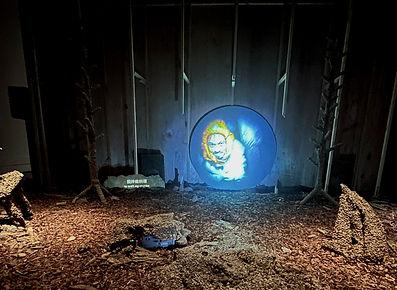
Figure 3. | Zhang Xu Zhan, “Termite Feeding Show,” 2025, installation view, photography: Anqi Li
This tension surrounding voice and perception leads into the final immersive room. The space is enveloped by Paper Skin–Taitung (figure 4), an installation made of folded local newspapers. Here, paper reappears not as animated body but as tactile surface. Newspapers, once dense with language and public urgency, become texture and backdrop. Where the previous room centered on poetry and articulated voice, this space moves toward the removal of language. The use of print media evokes the decline of newspapers as a cultural form, paralleling the gradual fading of traditional paper effigy practices. Here, paper’s material vulnerability mirrors broader cultural precarity.

Figure 4. | Zhang Xu Zhan, entrance of “Paper Skin–Taitung,” 2025, installation view, photography: Anqi Li
The video work in this room emphasizes rhythm, repetition, and gesture over linear storytelling. Through a composite of different versions of the Southeast Asian folktale The Mousedeer Crosses the River, clips are arranged in sequences that resist fixed narrative order, compelling visitors to assemble connections on their own. In this process, meaning becomes something extracted and assembled rather than delivered (figure 5). We recognize how easily we construct coherence from fragments and impose stories onto discontinuity.

Figure 5. | Zhang Xu Zhan, “Lakeview Square _ _Animal Story Series,” 2022, installation view, photography: Anqi Li
Returning to the exhibition title, the significance of “circus” becomes clearer. A circus is a space where risk and fragility are organized into spectacle. It promises wonder, but it also depends on controlled exposure. Within this framework, animistic beings are presented for observation. Their vulnerability is choreographed, lit, and made perceptible.
The exhibition therefore does not simply assert that all beings possess spirit. Instead, it asks how such spirits are staged within contemporary society. Paper lives move, sing, and flicker within carefully arranged environments. Their fragility is neither concealed nor redeemed. It remains visible, structural, and unresolved, inviting viewers to confront not only the vulnerability of these crafted creatures, but also the cultural narratives through which life itself is interpreted.
Sentient Beings Circus: An Animistic Journey with Mice, Termites, Rabbits, Foxes, Mousedeers, and Flies, Solo exhibition of ZHANG XU Zhan老鼠、白蟻、兔子狐狸鼠鹿與蒼蠅的生靈馬戲- 張徐展個展
臺東美術館 Taitung Art Museum 2025.8.10 — 10.26
つくるよろこび、生きるためのDIY
河田珠希

本展は、身近にあるものを使って何かを作り出したり、新たな他のものへと作り変える営みを指すDIY(Do It Yourself)をテーマに若木くるみ、瀬尾夏美、野口健吾、ダンヒル&オブライエン、久村卓の作品を取り上げている。
周知のようにDIYは、美術館やアーティスト特有の文化でもなく、私たちの日常生活にも広く浸透している。一方で筆者自身はDIYを実践する機会に恵まれてこなかった。テレビやYouTubeなどでよく見る「〇〇のDIYのやり方!」と題されて流れてくるものをただ眺めている程度であった。それも、DIYというのは「すでに使えなくなった何か」を「再生させる」という目的が強い印象だったからで、そこまでの労力を消費するくらいなら新たに買ったほうが効率的ではないかと非サステナブルな意見があったからだ。
しかし本展においてDIYへの考え方、DIYとは何を指すのか、を再度検討することになった。DIYとはモノの生産性や実用性を目指すだけのものではないのかもしれない。モノと向き合う時間、作り出す過程、人とモノが関わっていくこと。それらを含んだより包括的な概念としてDIYを捉えなおす必要があるのではないかと感じた。
Figure 1.|久村卓PLUS _Ralph Lauren _colorful over checked shirt ,2025, Photo by Kawada Tamaki
第1章では「みることから始まるDIY」と題して、身の回りの何気ないものを観察し、そこに手を加えた作品を扱う。版画家の若木くるみの作品は、空き缶や使い終わった伝票などその先の用途が不明なものに、デザインを書き足し版として摺り、作品をつくる。見覚えのあるモノたちが若木の創造力によって新たな命を吹きこまれている。生活の中で見たことのあるモノだからこそ、今まで私たちがそれらを目にしてきたとき何を考えていたのか、はたまた何に気づかなかったのか問いかける。DIY展序盤に、DIYには必須である「日用品」を見てきた自分たちの視点について最初に考えさせる、本展の導入があったのは本展としてとしては相応しかい章だった。
第2章は「失って立ち上げていくDIY」。大震災や貧窮により「住まい」や「暮らし」を変化せざるを得なかった人々を見つめる作品を取り扱う。東日本大震災の被災者とともに生活を営み、彼らの存在をドローイングと文章で捉え直した瀬尾夏美、ホームレスの人々を訪ね、彼らのポートレートをカメラに収め続ける野口健吾。この章を通して筆者は、これらの営みをDIYと呼ぶことの妥当性に疑問を抱いた。DIYは本来、主体的に何かを自分でやる行為を指す言葉である。しかし、この2人の作家が扱うのは震災などの予測不可能な事態や経済的困難といった自分ではどうしようもならないことで、自分が送っていた生活を変化せざるを得なかった人々だ。自ら何かを変えようとしたのではなく、極めて悲しい事情によってそうせざるを得なかった人々の切実な営みを、他の章の作家のDIYと同じように語ることにはいささか疑問が残る。
次に第3章の「DIYでつくる かたちとかかわり」。章が進むにつれ、DIYという行為の中に不可欠な身体性を強く意識した展示になってくる。この章ではアーティストユニット、ダンヒル&オブライエンと久村卓が取り上げられる。特に久村は身体的に負担の少ない制作過程を重視し、美術制度の外に置かれているような素材を中心に作品を作る作家で、人の体とものづくりの関係について考えさせられる展示であった。
第4章では「DIYステーション 自分でやってみよう」。鑑賞者自身がこの展覧会を振り返り、どんな感想を抱いたのか、心のうちを形にしたり、展示作家の作品にアクセスできたりする広場的な空間となっていた。美術館が展示を一方向的に見せるのではなく、鑑賞者との繋がりを意識する最後の章は、自分と身の回りのモノ、コトとの関わり合いを考えるDIYの定義と重なる。
作品と作り手の関係や、作品を生み出す行為そのものが不可視化されがちな美術館展示において、本展は制作のプロセスや営みに焦点を当てていた。その点で本展は、美術館における「作品中心」の語りを再考する機会を含んだ展覧会であったといえる。
参考:『つくるよろび 生きるためのDIY 展覧会図録』
「つくるよろこび、生きるためのDIY」
東京都美術館、2025 7/24-10/8
The Splendor of Dream of the Red Chamber/看得見的紅樓夢, 目で見る紅楼夢、國立故宮博物院
Anqi Li
The Splendor of Dream of the Red Chamber, with its Chinese title 看得見的紅樓夢 (Dream of the Red Chamber that can be seen), attempts a transduction across media: from a novel that evolves through time to a museum display with objects fixed in space. It proposes a reciprocal relation between text and material: the novel gives narrative significance to museum objects, while artifacts give the novel physical presence.
The exhibition starts by establishing this autobiographical novel’s historical context. Correspondence between the author Cao Xueqin’s grandfather and the emperor (figure 1) sets the conditions for the novel: a world entangled with Qing aristocratic life. However, historical anchoring alone cannot explain why “the Red Chamber” feels so materially saturated to its readers. The display therefore also includes exotic foreign objects like those mentioned in the text (figure 2). This treats what is often dismissed as descriptive ornament as a meaningful part of the novel, solidifying the material world in which the plot becomes thinkable.


Figure 1. | National Palace Museum, “Memorial on Respectfully Greeting the Emperor and Requesting Permission to Journey to the Capital to Express Gratitude After Attending to the Salt Affairs by Cao Yin on the 29th Day of the 7th Month of the 43rd Year of the Kangxi Reign,” Qing Dynasty, installation view, photography: Anqi Li
Figure 2. | National Palace Museum, “Pocket Watch with Figures in Painted Enamel,” Europe, 18th Century, installation view, photography: Anqi Li
Other than decorating and substantiating the book, National Palace Museum also employs a curatorial strategy that enables the objects to contribute to the story. The book Dream of the Red Chamber is about the slow disintegration of the once noble household of Jia and the intertwined destinies of its female members (figure 3). By linking objects on display to these individual characters, materiality begins to operate as narrative logic rather than background elements.

Figure 3. | National Palace Museum, “Qianlong Jiaxu Zhiyanzhai Zhong Ping Shitou Ji (Zhiyanzhai’s Re-Annotations to The Story of the Sone, Qianlong Jiaxu Edition),” written by Cao Xueqin, Qing Dynasty, Photocopy published by The Commercial Press in 1961 with inscription by Hu Shih, installation view, photography: Anqi Li. The Story of the Stone was the original name of Dream of the Red Chamber
A bamboo brush washer carved with lotus leaf, for instance, is presented in resonance with the “scent box carved from a whole bamboo root” used by Jia Tanchun in the book (figure 4). In traditional symbolism, bamboo signifies uprightness and integrity. The exhibition does not stop at visual resemblance or aesthetics; it activates the symbolic attribute to imply a causal sequence. Uprightness aligns with Tanchun’s unyielding disposition, and that disposition leads to her eventual separation from the falling house. The object therefore functions as a material condensation of personality and fate. Here the exhibition most clearly demonstrates mutual invocation: the text breathes narrative into the inanimate objects, while the artifact becomes the site where the story takes material form.

Figure 4. | National Palace Museum, “Bamboo Brush Washer Carved with Lotus Leaf,” early Qing Dynasty, 17th Century, installation view, photography: Anqi Li
At the same time, the novel’s tragedy resides in the temporal arc that contrasts the peak and the fall. “Splendor” carries weight precisely because it is unstable and advances toward erosion. Museum display, by contrast, stabilizes refinement at a fixed moment, isolating it from the process of decay. The friction between literary time and exhibition space is structural.
Within this friction, the exhibition finds its inventiveness. By aligning objects with character and destiny, it introduces temporal implication into a system oriented toward preservation. Symbolic causality substitutes for duration. This strategy, however, depends on familiarity with the novel. Without that framework, refinement remains aesthetic. “The Red Chamber” becomes visible primarily as fragments behind glass. Yet within the institutional limits of the museum, the exhibition makes the tension between splendor and decline perceptible. It presents “The Red Chamber” not as an immersive reconstruction, but as an object network in which character and fate continue to resonate.
The Splendor of Dream of the Red Chamber, 看得見的紅樓夢, 目で見る紅楼夢,
國立故宮博物院 National Palace Museum 2024 5.17 —2027 8.15
https://www.npm.gov.tw/Exhibition-Content.aspx?sno=04013668&l=2
honorable mention-still waiting